
Tradition – When time leaves its mark
Restoration of paintings
Paintings age just like houses, furniture, or human memories. Colors fade, varnish darkens, canvas warps, and tiny cracks gradually disrupt the overall impression of the work. Yet old paintings still carry the original emotion, the artist’s signature, and the story of the era in which they were created. That is why restoring paintings makes sense—not as an attempt to turn back time, but as sensitive care for what has survived.
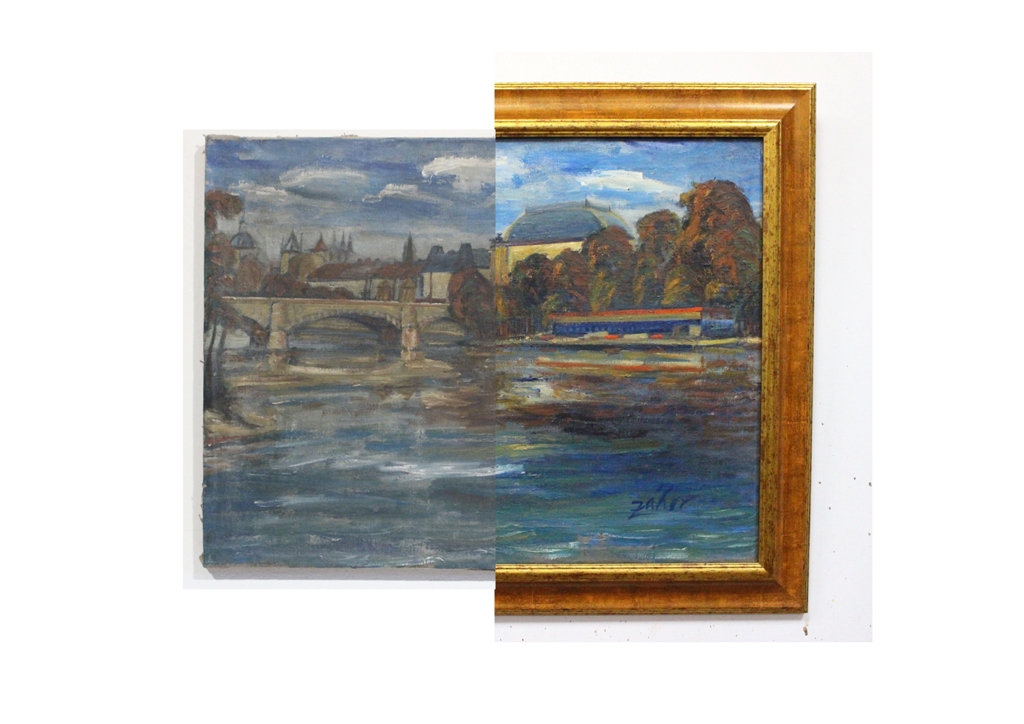
Every painting has its own story
Paintings of very different origins find their way into the restoration studio. Some have high artistic or historical value, while others are more like family heirlooms that are important primarily to their owners. In both cases, the approach is the same—respect for the original work and its author.
Paintings often bear the marks of long years spent in unsuitable conditions. Moisture, dust, smoke, sunlight, or unprofessional interventions from the past leave consequences that gradually worsen. Restoration is then not a question of aesthetics, but primarily of saving the very essence of the work.
What changes in paintings
A common problem is faded or yellowed varnish, which gradually covers the original colors of the painting. The paint layer may crack, peel off, or be completely missing in places. The canvas deforms due to tension and moisture, and wooden substrates warp and lose stability. Older paintings often feature inappropriate repainting, which alters the original expression of the work.
Each type of damage requires individual assessment—there is no universal procedure that works the same for all paintings.
Restoration as a process, not an intervention
The restoration itself does not begin with a brush, but with careful observation. First, it is necessary to understand how the painting was created, from what materials and using what techniques. Only then can the right procedure be chosen to help the work, not harm it.
The goal is not to create a “new” painting, but to preserve its authenticity. Interventions are always guided by the desire for minimal intervention and maximum respect. The restorer should remain in the background – only the painting itself should be visible.
When the frame is part of the whole
The frame is often part of the painting, completing its expression and historical context. A damaged or improperly repaired frame can disrupt the whole, as can poorly executed retouching. That is why, when restoring paintings, we also repair and stabilize the original frames so that the final presentation looks natural and balanced.
Why restoring paintings makes sense
Restoration is not just technical work. It is a dialogue between the past and the present, between the author and the person who holds the work in their hands today. Properly executed restoration allows the painting to live on, to be seen and perceived without losing its character.
And that is where its greatest value lies.